Fourteen Pins, One Crooked, and a Hymn Stuck in Brass
Fourteen pins. That’s all I punched before I ruined the cylinder.
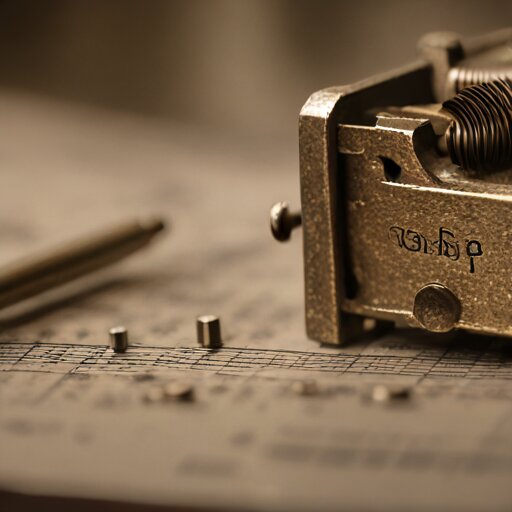
The cylinder arrived from a dealer in Sainte-Croix—the Swiss town in the Jura Mountains that became the world capital of this craft in the 1800s—and it came blank, pre-drilled with a grid of tiny pilot holes waiting for pins. I had the punch jig, the brass wire, the calipers, and a transcription of “Simple Gifts” that I’d mapped to the comb’s seventeen notes. The plan was elegant: punch the pins in a spiral pattern to avoid warping, work slowly, test after every eighth pin. Four hours, maybe five, and I’d have a cylinder that played a Shaker hymn on a mechanism built before the phonograph existed.
Pin seven went in crooked.
I noticed it immediately—the wire seated at a slight angle instead of perpendicular to the cylinder surface. Maybe 3 degrees off vertical. Not much. I tried to straighten it with needle-nose pliers, which is when I learned that brass pins at 0.8 mm diameter have almost no tolerance for lateral stress. The pin bent at the base, weakening the brass around the hole. When I tried to extract it, the material around the hole lifted slightly, creating a tiny crater.
The crater threw off pins eight through fourteen because I was working in a spiral and the stress had propagated.
The Binding Order Problem
There’s a concept in lockpicking called binding order—the sequence in which pins bind depends on manufacturing tolerances, and you have to find the right sequence or you’ll never set the stack. Cylinder pinning has its own version. The forum posts warned about this: if you punch pins too close together too quickly, the brass deforms microscopically, and adjacent pin holes shift position. Experienced pinners work in a deliberate spiral, balancing stress across the cylinder, never completing a single track before its neighbours have pins to share the load.
I knew this. I’d read it three times. But the transcription sheet in front of me had “Simple Gifts” laid out by note, not by punch order, and I followed the melody instead of the metal.
Fourteen pins in, the cylinder plays exactly nothing. Pin seven buzzes against the comb tooth without plucking it—the angle is wrong. Pins nine and twelve sit so close together that the comb teeth can’t reset between them; they produce a single blurred note instead of two distinct ones. Pin fourteen might be fine, but I’ve lost confidence in the whole first phrase.
What the Comb Wants
The comb is a set of tuned steel teeth—lamellae, in the French jargon that still dominates this craft. Each tooth is a specific pitch, determined by length and thickness, and the comb that came with this mechanism has seventeen notes in a diatonic G major with two chromatic additions (F-sharp and C-sharp). “Simple Gifts” requires exactly zero chromatic notes, which is why I chose it.
But the melody also requires timing, and timing is where I’m failing. On a music box cylinder, short notes get pins. Long notes get staples—tiny wire bridges that hold the tooth lifted for the duration. I’m not ready for staples. I figured pins-only would produce a staccato but recognizable version of the tune.
The problem is that pins placed too close cause the mechanism to “choke”—the tooth doesn’t have time to return to rest position before the next pin arrives. The tutorials say minimum spacing should be 0.5 mm circumferentially for a cylinder turning at standard speed. My transcription calculated 0.3 mm between the two notes at the start of the second phrase. I punched them anyway, trusting math over mechanism.
The mechanism disagreed.
The Lesson from Nibs
When I was learning to tune fountain pen nibs last week, I bent a tine too far on my first real restoration attempt. The fix was straightforward: bend it back, check under magnification, repeat. The feedback loop was forgiving because metal has memory and nibs are designed to flex.
Cylinder pins don’t flex. They seat or they don’t. A crooked pin stays crooked, and extraction risks damaging the hole. The cylinder sitting on my bench right now is probably salvageable—I could drill out the bad pins, fill the holes with brass rod, and re-punch—but that’s a repair workflow, not a composition workflow. I came here to transcribe music, not to practice metallurgical triage.
What I’m Sitting With
The cylinder cost $140 CAD. The punch jig was another $85. I drove to the hobby shop for 0.8 mm brass wire and stood there for five minutes comparing it to 0.7 mm wire because the tutorials disagreed about which was correct. (0.8 mm was correct for my comb. Small victories.)
Tomorrow I’ll strip the fourteen bad pins and try again on the same cylinder, working in the spiral pattern I should have followed from the start. Or I’ll order a new blank and accept that this one is a learning object, not a finished piece. Either way, the cymbal-bright sound of a functioning music box isn’t happening tonight.
There’s a previous post in this collection where I printed a disc that held a star’s spectrum but played no music—pin height wrong by 0.3 mm. That failure felt philosophical. This one just feels clumsy.
The comb sits ready, seventeen teeth waiting for a melody I haven’t successfully encoded yet. The cylinder holds fourteen bent confessions of impatience. And somewhere in Geneva, the descendants of the watchmaker who invented this craft in 1796 are not spinning in their graves because they had better things to do than watch a Canadian architect learn the hard way that piquage requires patience.