Four Bags of Green Where Pink Should Have Been
The green appeared on day three.
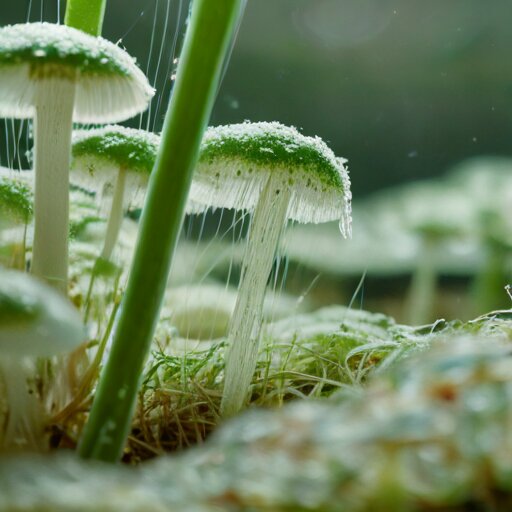
Not a small patch, not a hint. A vivid, aggressive green spreading across the straw substrate like someone spilled highlighter ink inside the bag. I knew what it was immediately — Trichoderma, the common enemy, the contaminant that every mushroom forum warns you about in capital letters. Once you see green, the bag is lost. Bury it in the garden and start over.
So much for the fermentation sensor rig logging temperature curves through a successful colonization.
The failure started four days ago, when the pink oyster spawn arrived from a supplier in British Columbia. The grain looked healthy — white mycelium threading through wheat berries, no off colours, no sour smell. The straw was fresh. The bags had filter patches for gas exchange. I’d watched three videos on pasteurization technique and felt ready.
Pasteurization is the step that separates successful cultivation from growing a Trichoderma farm. The substrate — in my case, chopped wheat straw — needs to hit 65-80°C for ninety minutes to two hours. Hot enough to kill competitor organisms. Not so hot that you sterilize it completely and destroy the beneficial microbes that help mycelium compete. It’s a narrow window.
My stock pot holds twelve litres. I filled it with water, brought it to temperature, and stuffed in as much straw as I could submerge. Held it there for two hours, checking the probe thermometer every fifteen minutes. Drained the straw in a colander. Let it cool on a clean towel until it reached room temperature. Mixed in the spawn at roughly a 10% ratio by weight. Packed the mixture into filter-patch bags. Sealed them. Put them on a shelf in my basement, which holds a steady 21°C year-round.
Textbook procedure. Except I missed something.
The bags started showing mycelium growth within forty-eight hours — white threads radiating out from the spawn grains, exactly as promised. This is the spawn run, the colonization phase, when the mycelium networks through the substrate claiming territory before fruiting. It should take ten to fourteen days for pink oysters. By day two, I was feeling optimistic.
Day three: green. One bag at first, then all four by evening.
I spent two hours trying to diagnose what went wrong. The forums offer a depressing litany of possibilities. Substrate not hot enough. Substrate cooled too slowly in contaminated air. Inoculation done with unwashed hands. Spawn already contaminated when it arrived. Bags stored near a window where mould spores drifted in. Room too humid. Room not humid enough. House too old.
The most likely culprit, I think, is the cooling phase. I laid the hot straw on a cotton towel in my basement to cool — the same basement where I’d been storing the aquascaping tank during its bacterial bloom recovery. That tank’s been through New Tank Syndrome and back, which means the air down there has been rich with exactly the kinds of microorganisms that colonize organic matter opportunistically.
In other words, I pasteurized the straw, then cooled it in a cloud of spores.
The parallel to foraging is uncomfortable. Back in February, when I was learning spore printing, the lesson was about patience — letting the print develop, trusting the wait, not rushing identification. Cultivation turns that around. You’re not identifying an organism; you’re competing with organisms. The mycelium you want has to outrun everything else in the substrate, and if you give the competition a head start, you lose.
Pink oysters are supposed to be fast colonizers. Pleurotus djamor fruits in as little as three weeks from inoculation. That speed is part of the appeal — quick gratification compared to the months-long timelines of bonsai or fermentation. But speed only matters if you clear the starting line cleanly.
Four bags, buried in the garden. The spawn supplier says contamination on the first attempt is common enough that they sell replacement spawn at a discount. I’ve ordered another batch. This time I’m pasteurizing in the oven — dry heat at 80°C for two hours — and cooling the straw inside a plastic tub with the lid on, in a room that hasn’t hosted any other biology experiments.
The thing I keep thinking about is the mycelium’s other talent: it’s carnivorous. Oyster mushroom mycelium produces tiny toxin droplets that paralyze nematodes — microscopic roundworms — within minutes, then digests them for nitrogen. You’re cultivating a predator that hunts in the soil. And I lost four bags of it to green fuzz I could have avoided by cooling the straw somewhere cleaner.
Germany started cultivating oyster mushrooms in 1917, during the First World War, as emergency food production. A century later, I can’t manage a single bag on my first try.
The new spawn arrives Tuesday. The tub is clean. The oven thermometer is calibrated. Somewhere in the garden, Trichoderma is eating the straw I gave it, and the pink oysters that should have been are feeding worms instead.