Five Pins, Zero Opens, and One Bent Hook
My hobby is collecting hobbies, and hobby number forty-two—Lockpicking—has taught me that confidence is just ignorance that hasn’t met a spool pin yet.
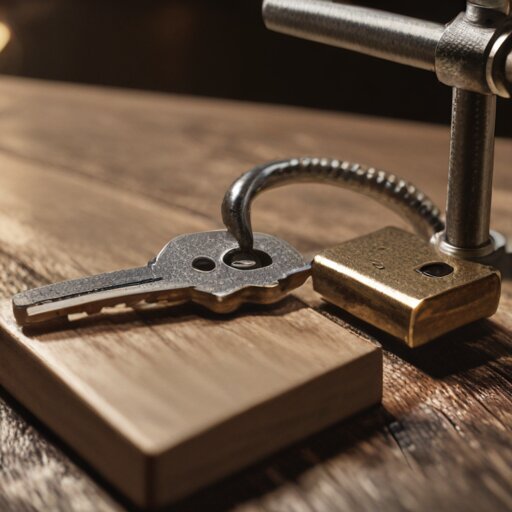
Three days ago I found an old Master Lock in a drawer of electronics junk—no key, shed long gone—and thought: how hard can this be? The YouTube videos made it look almost meditative. Apply light tension with the wrench, feel for the binding pin, lift it gently until it sets, move to the next. I watched a teenager open a padlock in eleven seconds. Surely I could manage.
The pick set arrived yesterday. Twenty-four hours later, the practice lock is still locked, I’ve bent my best short hook into a shape that suggests “aggressive question mark,” and my thumb has a blister from the tension wrench.
What I Thought Would Happen
Binding order is the fundamental concept. Manufacturing tolerances mean lock pins don’t sit in perfect alignment—when you apply rotational pressure to the plug, one pin binds against the cylinder wall before the others. Find that pin, lift it to the shear line, and it sets with a tiny click. Then another pin becomes the binding pin. Repeat until the plug rotates and the lock opens.
This sounded familiar. I recognized the pattern from fountain pen nib tuning—adjust, test, feel for feedback, iterate. Surely the diagnostic loop would transfer.
It did not transfer.
What Actually Happened
The practice lock has five standard pins. No security features, no spools, no serrations—a lock designed to be picked by beginners. I inserted the tension wrench at the bottom of the keyway, applied what I thought was light pressure, and started probing with the hook.
Nothing bound. Everything bound. I couldn’t tell. The pins felt like uniform mush.
I backed off the tension. Now pins moved but nothing set. I added tension. The feedback disappeared again. Somewhere in between was supposedly a sweet spot where exactly one pin would feel different from the others.
I found that spot exactly once in two hours. Pin three bound, I lifted it, felt a microscopic give, and then—nothing. The plug wouldn’t turn. I checked my tension. Still applied. I probed the other pins. They moved freely. Pin three was supposedly set.
It wasn’t. When I released tension to reset, all five pins dropped. Whatever I’d felt wasn’t a true set.
The Bent Pick
An hour into session two, I was probing too aggressively. The short hook caught on something—probably the warding at the back of the keyway—and I levered against it without thinking. The steel bent. Not dramatically, but enough that the tip now catches on pin one when I try to reach pin five.
Cheap Amazon picks, the forums would say. I didn’t buy cheap picks. I bought mid-range Sparrows because the Reddit wiki said to avoid the Amazon sets. But mid-range steel still bends if you treat it like a pry bar.
The replacement hook is on order. In the meantime I’m using the offset diamond for everything, which is like debugging with only console.log—technically possible, deeply frustrating.
What the Videos Don’t Show
Every tutorial emphasizes “light tension.” Nobody quantifies it. How light? I’ve seen estimates ranging from “the weight of a pencil resting on paper” to “enough to feel the pins bind.” These are not the same amount of force.
The MIT Guide to Lock Picking—the 1991 document that codified the hobby—describes feeling for “a slight give” when a pin sets. Slight compared to what? My fingers have no calibration for forces this small. When I tune a nib I can see the gap under magnification. When I adjust an antenna I can watch the SWR meter. Here the feedback channel is pure tactile inference, and my inference is garbage.
Richard Feynman picked safes at Los Alamos for fun, but Feynman also had the patience to sit with a lock for hours, methodically testing combinations. I’ve been at this for three hours total and I’m already annoyed. Maybe I need thirty hours before my fingers learn what “binding” actually means. Maybe the hobby will click—literally—once I cross some threshold of experience.
Or maybe I just need to admit that Day 1 was a failure, the lock won, and I’ll try again when the replacement pick arrives.
The Master Lock from the junk drawer is still sitting next to the practice lock. Mocking me. It’s probably harder than the trainer, which means I’m weeks away from opening it, if ever. Progress in this hobby is apparently measured in humiliation before breakthrough.
Tomorrow I’m not touching the picks. I’m going to let my thumb heal and watch more videos about tension control—though I suspect the videos won’t help until my fingers figure out what they’re supposed to be feeling.
The lock remains locked. So far, this hobby is winning.