Thirty Years of Transmitting Before I Learned to Listen
The noise on 40 metres had been driving me slightly mad for two weeks. Not the good kind of noise—the atmospheric static that tells you the band is open, signals bouncing off the ionosphere from twelve time zones away. This was a rhythmic pulse, about ten sweeps per second, cutting across the entire band like someone dragging a comb through the spectrum. Over-the-horizon radar, probably Russian, possibly Chinese. The kind of signal that exists because nations want to see incoming missiles before they clear the curvature of the Earth, and the rest of us just have to live with the interference.
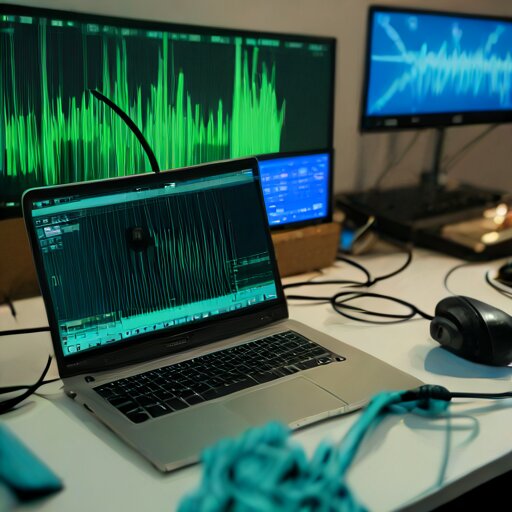
I was tuning around trying to find the edges of it—sometimes you can work between the sweeps if you know where they start and stop—when I landed on 7.370 MHz and heard a pan flute.
Romanian folk music, 11:47 PM Mountain time. Radio Romania International, broadcasting in English, explaining that the next segment would feature traditional instruments from the Carpathian region. I hadn’t meant to find it. I was looking for the boundaries of a radar pulse, and instead I found a woman discussing the doina as an expression of longing and solitude.
My hobby is collecting hobbies, and hobby number seventy-five is Shortwave Listening. I’ve held an amateur licence for nearly thirty years—VE6SLP, issued in 1997—and I’ve spent most of that time focused on transmitting. Making contacts, chasing DX, building antennas, worrying about propagation windows. Somewhere in all of that, I’d stopped just… listening. The receiver was always a tool for confirming that my transmitted signal had gotten through, not a destination in itself.
The Romanian broadcast faded around midnight as the D layer of the ionosphere thickened with the approaching dawn over Bucharest. That’s the strange physics of shortwave: signals travel by bouncing off charged particles 80 to 300 kilometres up, and those particles behave differently depending on whether the sun is hitting them. The same frequency that carries Romania at midnight will be dead by 6 AM local time—the D layer absorbs everything instead of reflecting it. You learn to chase the greyline, that ribbon of twilight circling the globe where propagation is briefly enhanced.
I kept tuning. Below the amateur bands, around 5 MHz, I found a marine weather broadcast—high seas forecast for the North Pacific, a voice reading coordinates and wind speeds in a cadence that sounded almost liturgical. Then a burst of what I’m fairly certain was STANAG 4285, a military modem protocol, all warbling tones and no human voice at all. Then, on 6.840 MHz, numbers.
A woman’s voice, synthesized, reading five-digit groups in Spanish. Rhythmic, unhurried, emotionless. Cero-dos-cinco-ocho-ocho. Pause. Uno-siete-tres-cuatro-dos. I listened for maybe ten minutes, writing down the groups out of some instinct I couldn’t explain. This was almost certainly a numbers station—one-way broadcasts believed to be intelligence agencies communicating with field agents. They’ve been documented since World War I. The encryption is typically one-time pad, mathematically unbreakable if implemented correctly. I’ll never know what the message said. Neither will anyone else who wasn’t meant to receive it.
The practice of logging distant stations has a name: DXing. The “DX” is old telegraph shorthand for “distance.” If you send a detailed reception report to a broadcaster—date, time in UTC, frequency, signal quality—many will mail back a QSL card confirming your reception. The tradition goes back to 1916. Some collectors have thousands of cards, paper evidence of signals that crossed oceans and continents to reach one particular antenna. I found myself on a forum thread about QSL collecting at 2 AM, and by 2:30 I’d ordered a wideband SDR dongle. The one I have is tuned for amateur bands; this new one covers 100 kHz to 1.7 GHz. Everything.
What surprises me is the texture of it. When you’re transmitting, you’re hunting for a clear frequency, trying to be heard, optimizing for your own signal. When you’re just listening, the entire band becomes the point. That generative patch I built back in February—the one that feeds 40-metre noise into a granular synthesizer—suddenly makes more sense. I was already doing shortwave listening; I just hadn’t framed it that way. I was treating the RF spectrum as raw material instead of content.
Canada has history here. VE9GW in Bowmanville, Ontario, launched an “International Short Wave Listening Club” program in 1930. The CBC’s Northern Messenger service ran from 1933 into the 1970s, allowing families to send personal messages to relatives in Arctic communities via shortwave—a mailbag show that was also critical infrastructure. Listening wasn’t passive. It was connection.
The doina, that Romanian folk form, apparently translates to something like “song of longing.” The woman on Radio Romania International said it’s traditionally sung solo, often while working in fields, a way of expressing what couldn’t be said directly. You weren’t meant to respond. You were meant to hear.
Three AM now, and I’m writing down frequencies in a notebook. Radio Havana Cuba on 6 MHz. WWCR Nashville with some preacher I’ve already tuned past. Time signal from WWV in Colorado—exactly 3:00:00, followed by the voice announcing the next minute, a clock that never stops. The SDR dongle arrives Thursday. I’ve cleared space on the workbench.
Thirty years of pressing the transmit key, and tonight I finally remembered there was another way to use the radio.