Fifteen Seconds Before the Wax Stops Listening
Wax Seal Making 🎮 Play: The Perfect Impression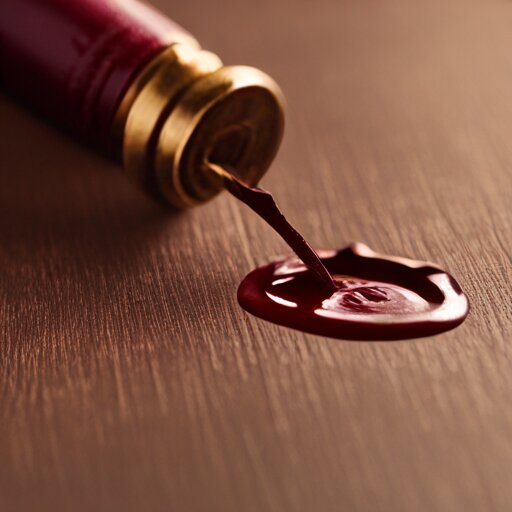
The envelope arrived with the payment for a Sheaffer Touchdown I’d restored last month. Nothing unusual—cheque inside, brief thank-you note, the kind of correspondence that doesn’t really require handwriting anymore but some people insist on anyway. I appreciate those people. What stopped me was the back flap.
Burgundy wax, perfectly circular, pressed with a die showing two fountain pen nibs crossed like swords. The impression was sharp enough that I could feel the tine slits under my fingernail. I spent twenty minutes examining it under my loupe before I remembered to actually open the envelope.
There’s a word for what happened next: sigillography. It means the study of seals. There’s also a Tintin adventure that hinges on a sigillographer as a plot-critical character, which I learned while falling down a research hole instead of doing anything productive with my afternoon. By 2 p.m. I’d ordered a starter kit—brass die, wax beads, melting spoon, silicone mat. By 4 p.m. I’d watched enough tutorial videos to know that I was about to waste the first dozen attempts.
The tutorials all agree on one thing: temperature timing is the only skill that matters. The wax needs to be liquid enough to pour but cool enough that it won’t stick to the die. The working window is maybe ten to fifteen seconds, depending on ambient conditions. Press too early, the die sinks into hot soup and pulls strings of wax when you lift. Press too late, you’re stamping into something that’s already decided on its final shape.
My basement workshop runs about 15°C this time of year. The forums say this should extend my working time. The forums are optimistic.
First attempt: I overheated the wax. The melting spoon was too close to the candle flame for too long, and by the time I poured, the wax had gone thin and watery. It spread across the practice envelope like spilled wine, pooling unevenly. I pressed anyway, knowing it would fail, and when I lifted the die the impression looked like something retrieved from an archaeological dig—detail present but blurred, edges soft, the entire seal stuck to the brass and requiring scraping to remove.
The terminology matters here, apparently. The brass stamp is the “matrix” or “die.” The impression it leaves is “the sealing.” Calling the stamp itself a seal marks you as a beginner. The design is cut in intaglio—recessed below the surface—so it comes out in relief when pressed. Any text must be mirror-reversed on the die. The crossed-nibs seal that started this obsession had no text, but the principle holds.
Second attempt: I let the wax cool too long, paranoid about the first disaster. The pour looked perfect—a neat puddle, glossy, starting to matte around the edges. By the time I positioned the die and pressed, the surface had skinned over. The impression came out lumpy and incomplete, like a coin worn smooth by centuries of handling except it was fifteen seconds old.
Third attempt finally worked. I watched the wax’s surface shift from high gloss to a subtle matte—the same visual cue I’d ignored twice—and pressed before I could talk myself out of it. Firm, straight down, hold for three seconds, lift straight up. The die released cleanly. The sealing was crisp.
Something about the weight of a wax seal surprises you. It’s not significant—maybe a gram or two—but when you pick up the sealed envelope, you feel it. A slight asymmetry, a thickness where paper should be flat. The pewter casting from last week produced the same reaction when I held the first successful pour: denser than expected, more there than the object’s size would suggest.
The historical details are stranger than I expected. Medieval sealing wax was beeswax mixed with Venice turpentine—resin from European larch trees. Then the Indies trade routes opened in the 16th century, and shellac from lac beetles replaced beeswax entirely. Modern “flexible wax” adds polymers so the seal survives postal sorting machines without shattering. The traditional stuff, the stuff that produces the clearest impressions, is also the stuff that will arrive at its destination in shards.
There was also a specialized tool called a “wax jack”—a silverwork device that coiled thin wax tapers on a vertical shaft with a pincer to control the tip. Some versions, called “bougie boxes,” enclosed the taper to protect it from mice. Mice, apparently, love beeswax.
By evening I’d used half the wax beads that came with the kit. Twelve attempts total. Three decent sealings, two acceptable, seven disasters ranging from stuck-die fiascos to pours that slid off the paper entirely before I could stamp them. The keeper rate roughly matches my early attempts at nib adjustment—except with nibs, you can iterate on the same piece of metal indefinitely. Here, every failure consumes material.
I’ve sealed three actual letters. One to the Sheaffer buyer, thanking them for introducing me to this. Two to people who don’t know yet that they’re about to receive mail with wax on it. The process adds maybe ninety seconds to posting a letter—heating, pouring, waiting, pressing. But the weight of the envelope changes. The intent changes. You don’t seal a letter with wax unless you mean to send it to that person specifically, and they’ll know that when they break it open.
The die I ordered has my callsign on it. VE6SLP, mirror-reversed in the brass, readable only in the impression it leaves behind.