Fifteen Seconds Before the Foam Forgets Itself
Latte Art 🎮 Play: Pour Heart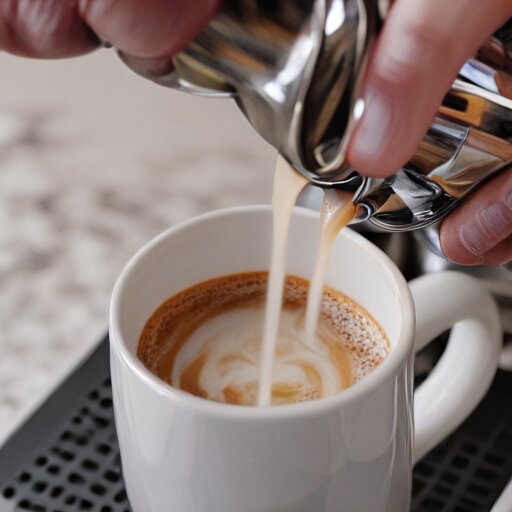
So that Gaggia Achille I pulled out of boiler-scale purgatory back in March? It’s finally pulling consistent shots. Took weeks of fighting with gasket hardness and descaling cycles and learning which precise moment to start pulling the lever, but the machine works. The crema is stable. The coffee tastes like coffee.
And the flat whites look like something from a hospital cafeteria.
You know that thing where you solve one problem and immediately become aware of a second problem you hadn’t even noticed? That. Every latte I’ve made on this machine has been a mug of brown liquid with a vaguely lighter blob floating on top. Functional. Drinkable. Completely devoid of the rosetta leaves and tulip layers that every café barista produces without apparent effort.
I watched one YouTube tutorial on milk steaming yesterday. Just one. Twenty minutes of a Scottish barista explaining the difference between “stretching” and “texturing,” and I understood immediately that I’ve been doing this wrong in at least four different ways.
Here’s the thing — and I genuinely didn’t know this until yesterday — there are two distinct phases to steaming milk for latte art. First you “stretch” it: hold the steam tip right at the surface, introduce air, listen for that tss-tss-tss sound. This should last maybe five seconds. Then you “texture” it: plunge the wand deeper, create a vortex that incorporates all those air bubbles throughout the milk. The foam should end up looking like wet paint. Glossy. Uniform. No visible bubbles.
I’ve been doing phase one for the entire duration, creating stiff, bubbly cappuccino foam that sits on top of the espresso like a hat instead of flowing into it. The texture was wrong from the start. Of course nothing I poured looked like anything.
What strikes me is how narrow the tolerances are. Milk temperature has to land between 55 and 65°C — below that and the proteins haven’t denatured enough